Company Town – Grønnbyen, Villamoen & Admini
Type:Building/cultural environment
3671, Notodden



To build your own Itinerary, click  to add an item to your Itinerary basket.
Already saved an Itinerary?





Workers, officials, and entrepreneurs – this was the hierarchy of housing in early 20th-century Notodden. Homes were arranged almost like terraces: workers lived at the bottom, officials and the middle class in the middle, and entrepreneurs, CEOs, and the upper class at the top with the best views. This geographic layering offers a unique insight into the class structure during Hydro’s early residential developments.
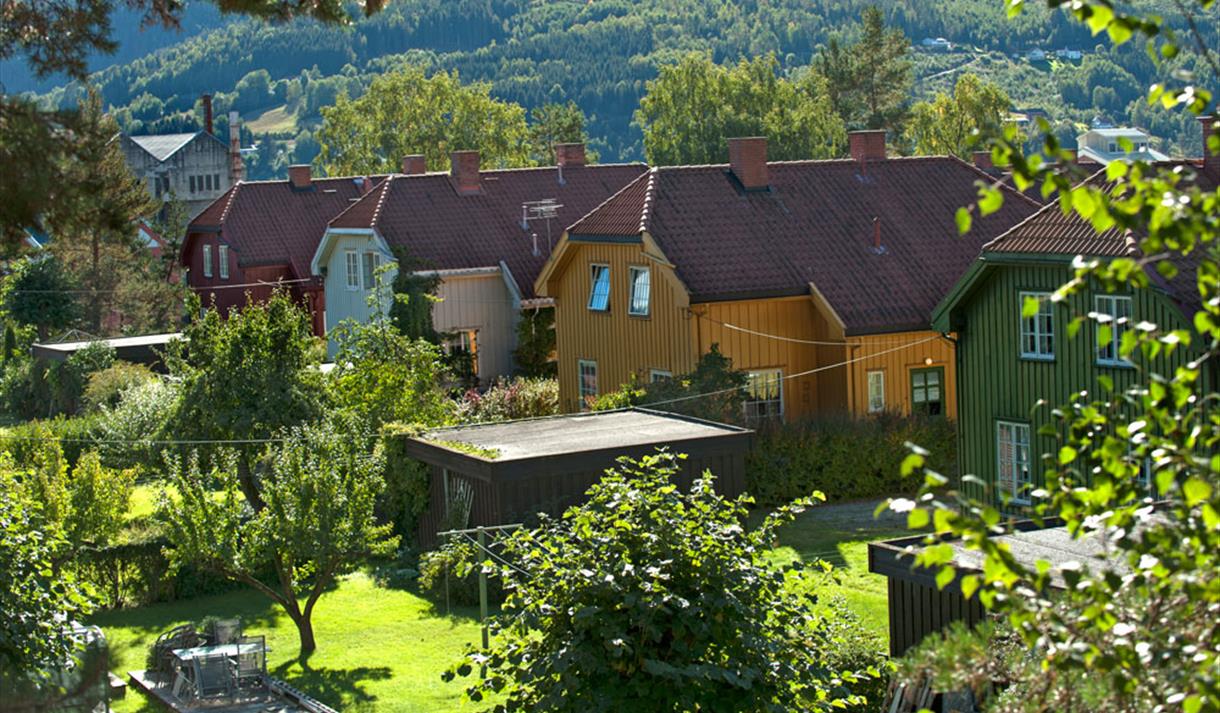
Grønnbyen features 25 vertically divided semi-detached houses for worker families, along with three single-family homes for the caretakers at the Notodden nitrate factories. While the living conditions were modest compared to the middle class, these homes were considered high quality for the time. In fact, Grønnbyen was among the first residential areas in Norway to have indoor toilets – reflecting Hydro’s commitment to modern worker housing.
In Villamoen, 17 single-family homes were built for officials and engineers, designed by prominent Norwegian architects such as Helge E. Blix, Henning Kloumann, and Carl Borch. The houses showcase multiple early 20th-century architectural styles, including Jugendstil, Classicism, and Neo-Baroque, representing a period of high architectural standards in Norwegian industrial towns.
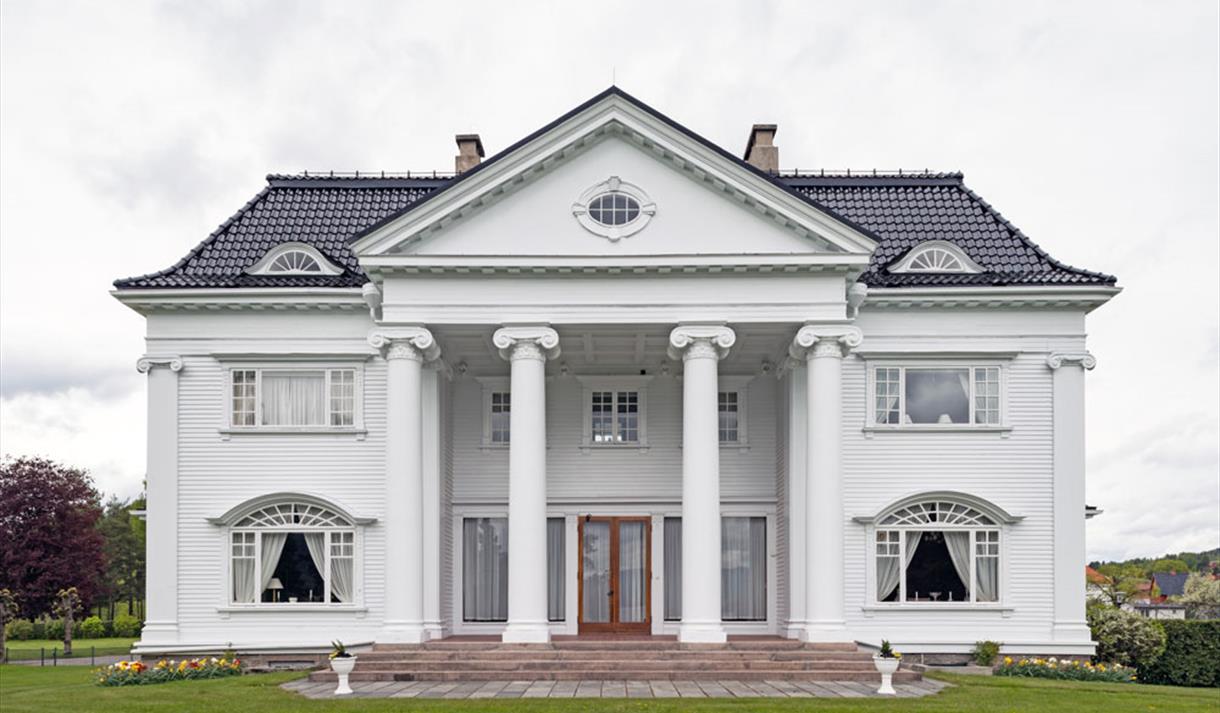
Admini was one of the first buildings Hydro constructed in Notodden. Located at the southern tip of Villamoen with views of the factories and Heddalsvannet, the house served as both residence and office for Sam Eyde. Admini impresses with its majestic Jugendstil and Neoclassical architecture, featuring interior carvings by Jon Borgarson, who won a gold medal at the 1900 Paris World Exhibition. The surrounding area includes a beautiful park and tennis courts, and all Hydro general meetings were held here until 1960. Today, Admini is still used by Hydro for representation and meetings.
Hydro’s early residential developments in Notodden, from Grønnbyen to Villamoen and Admini, demonstrate how industry, architecture, and social hierarchy were carefully planned. These areas remain important cultural heritage sites and offer insight into Norway’s industrial history and early 20th-century housing architecture.
Discover Notodden historielag – preserving local history and cultural heritage in…
Discover Tinnosbanen, Bratsbergbanen and Notodden Station – iconic Norwegian railways…
Explore Hydroparken in Notodden – the birthplace of industrial fertilizer production,…
Bok & Blueshuset (House of Books and Blues) is the new cultural center in Notodden. Here…
Explore 200 years of industrial history at Tinfos Cultural Heritage Site in Notodden — a…
Discover the 10.5m TRE steel sculpture by Erik Pirolt in Notodden! A striking monument…
The Telemark Art Museum and World Heritage Center show art and industrial history in a…
Visit Telemark Art Museum in Notodden! Discover contemporary art & historic treasures in…
Experience Heddal Open-Air Museum’s 15 historic buildings, stunning art, and unique…
Visit Heddal Stave Church in Notodden, Norway’s largest 13th-century stave church. Enjoy…
Recently Viewed
Culture House
Bok & Blueshuset (The Book & Blues House) is Notodden’s culture house—an open gathering place where…
Building/cultural environment
Discover over 200 years of Norwegian industrial history at the Tinfos Cultural Heritage Site in…
Swimming
Tinnemyra is a popular, family-friendly bathing area located in Notodden, Telemark. The site…
Yoga
Siljudalen is a unique retreat center and a vibrant meeting place for nature, stillness, and…
Indoor swimming pool
At Tinfos Bath, you can work out, exercise, loosen up stiff muscles and joints in the heated…
Ratings & Reviews
Powered By



© Visit Telemark 2026. Copyright