Saint Nicholas and the Eidsborg Pond
Type:History
Museumsvegen 9, 3891, Høydalsmo



To build your own Itinerary, click  to add an item to your Itinerary basket.
Already saved an Itinerary?


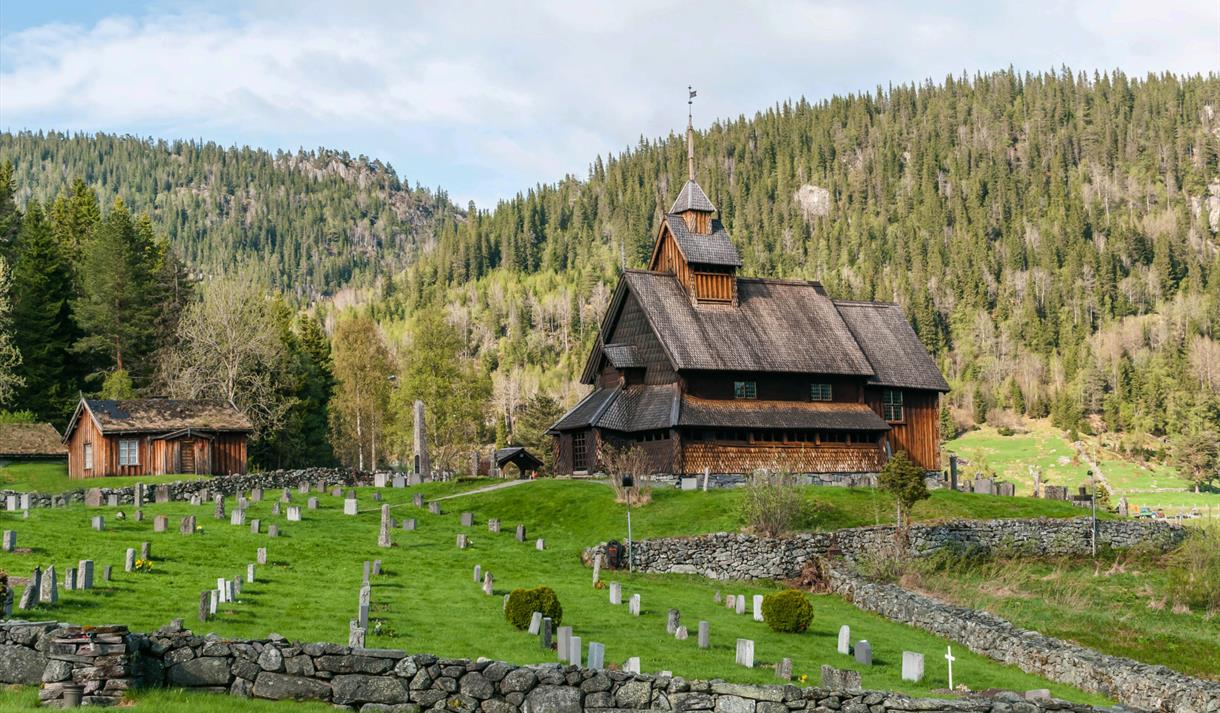
«Nikuls», as he is known locally, is the statue of the Catholic saint St. Nicholas that stands in Eidsborg Stave Church. The statue came to the church when it was consecrated and newly built. The figure standing there today is a replica; the original is housed in the Museum of Cultural History in Oslo, where it forms part of the permanent church exhibition.
The statue is dated to between 1270 and 1300.
St. Nicholas, bishop of Myra in present-day Turkey, was one of medieval Europe’s most beloved saints. He was known as the protector of sailors, children, the poor, and craftsmen. For Eidsborg, with its tradition of whetstone production, it is perhaps also significant that he was the patron saint of stonemasons. He is also remembered today as the historical inspiration behind Santa Claus.
The church once housed a relic, probably a small flask containing the famous healing «Nicholas water» from Bari, Italy, where the saint’s remains were kept. This relic helped connect the church to a unique local tradition.
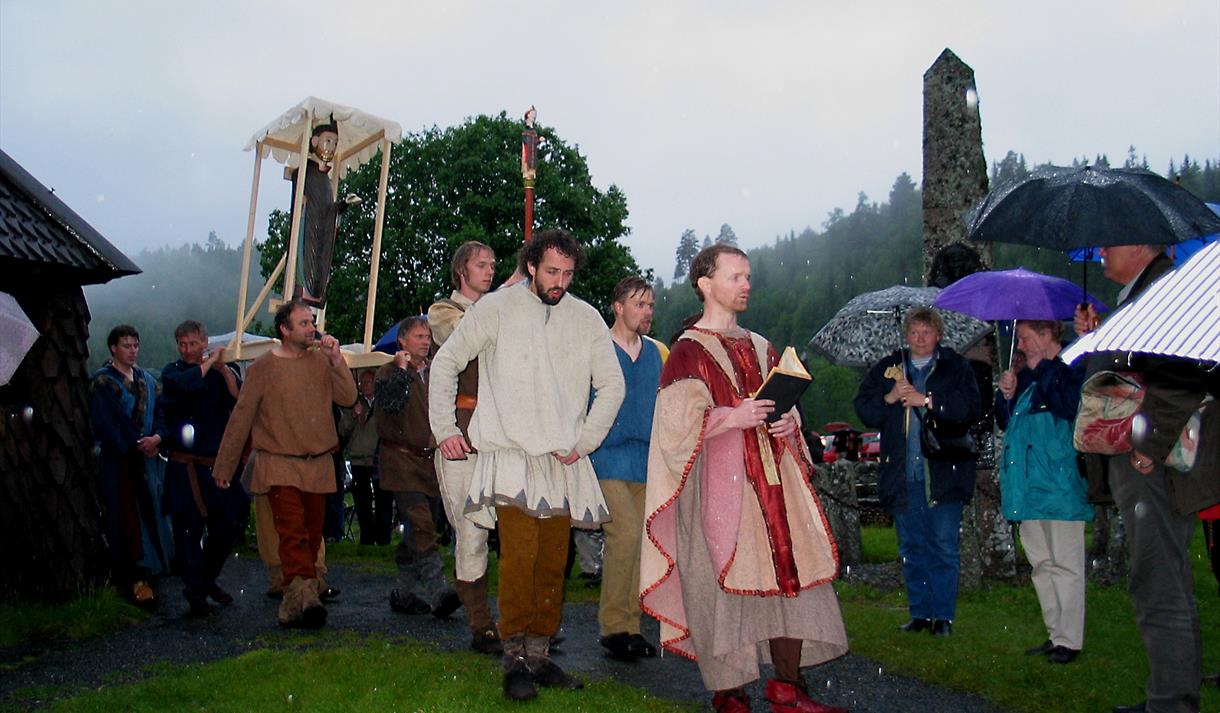
For centuries, on St. John’s Eve (24 June), villagers joined a religious procession carrying the statue of Nikuls from the church to the nearby pond Eidsborgtjønna. There, the statue was ceremonially washed, and the water was believed to bring healing and forgiveness. This remarkable blend of Christian saint worship and older midsummer customs survived for almost 500 years.
Read more: Saint Nicholas and the Magic Eidsborg Pond
It was not until the late 18th century, roughly 250 years after the Reformation, that the Lutheran Church finally succeeded in putting an end to the ritual, which was considered doubly inappropriate because it was both pagan and Catholic. A few decades later, in 1826, the statue of Nikuls was removed from the church. For many years it stood in the open gallery.
In 1836, the statue was finally sent to the newly established Collection of Antiquities in Christiania (Oslo), where it remains today as part of the permanent church exhibition at the Museum of Cultural History.
In 1964, the church received a replica of Nikuls, which can still be seen today at the rear of the nave.
Discover Eidsborg Stave Church! An 800-year-old cultural treasure, now dated to pre-1150!…
Is the storehouse of the legendary woman Åse Stålekleiv the oldest profane wooden…
Discover Vest-Telemark Museum! See Eidsborg Stave Church, Stålekleivloftet from 1184 and…
The Statkraft exhibit centre at the museum in Eidsborg tells the story of hydro power…
For about 1200 years Tokke has had an export industry of whetstones. For Norwegian…
Here at Grimdalstunet you can get a glimpse into the home of the artist Anne Grimdalen. A…
Oyfjell museum of Local History has a rich collection of tools, traditional costumes,…
The history of Sondre Norheim begins in Morgedal, Telemark.
Jazz lovers flock to New Orleans, Elvis fans congregate in Memphis, ski enthusiasts…
The valley of Smørklepp in Vinje made a lasting impression on the famous Norwegian artist…
The Skinnarland Collection houses more than 100 works of art by sculptor Knut Skinnarland…
The museum shows sculptures, paintings, graphic art and drawings by the famous artist…
What did a prosperous farm in West-Telemark look like about 200 years ago? At Kviteseid…
Kviteseid Old Church lies close to Kviteseid Bygdetun museum, on a beautiful plateau near…
Visit Fyresdal Bygdemuseum in Øyskogen, central Fyresdal. One of Norway's oldest folk…
Recently Viewed
Exhibitions
What did a prosperous farm in West-Telemark look like about 200 years ago? At Kviteseid Museum of…
Museum
Øyfjell Museum of Local History houses a rich collection of traditional tools, costumes,…
Church
Join the guide on a fascinating journey through 800 years. Hear the story of the stave churches in…
Ratings & Reviews
Powered By




© Visit Telemark 2026. Copyright